SPACE-MEL is an EU-funded MSCA Doctoral Network advancing the next generation of spatial single-cell omics technologies for precision medicine. Bringing together leading European universities, technology providers, clinical partners and innovative companies, the programme will address key experimental and computational challenges currently limiting the clinical translation of spatial biology. By integrating multi-omics approaches, enabling the transition from 2D to 3D tissue analysis and developing advanced data interpretation methods, SPACE-MEL aims to unlock deeper insights into cellular organisation and disease mechanisms. The network will train 15 Doctoral Candidates through an interdisciplinary programme spanning spatial imaging technologies, molecular biology, computational biology, pathology and biomarker discovery. Through cross-sectoral secondments, hands-on research and comprehensive transferable-skills training, SPACE-MEL will equip a new generation of researchers with end-to-end expertise in spatial biology and strengthen Europe’s leadership in this rapidly evolving field.
SPACE-MEL aims to advance spatial single-cell biology for melanoma precision medicine. The project will work towards developing 3D spatial multi-omics methods, integrating several molecular layers from the same tissue sample and creating accessible computational tools for complex data analysis. By applying these approaches to mucosal and early-stage melanoma, SPACE-MEL hopes to reveal new insights into tumour organisation, immune escape and clinically relevant biomarkers, ultimately supporting more precise patient stratification and future diagnostic and therapeutic strategies.
Spatial biology is exploding and everyone wants to perform spatial biology experiments
A real all-round expertise in spatial biology is not yet diffuse among researchers due to the complexity of the field
Spatial biology centres with real expertise are still elitary and very rare
Most spatial biology experiments produce data that are not fully exploited due to this gap
Spatial biology centres with real expertise are still elitary and very rare
Spatial biology centres with real expertise are still elitary and very rare
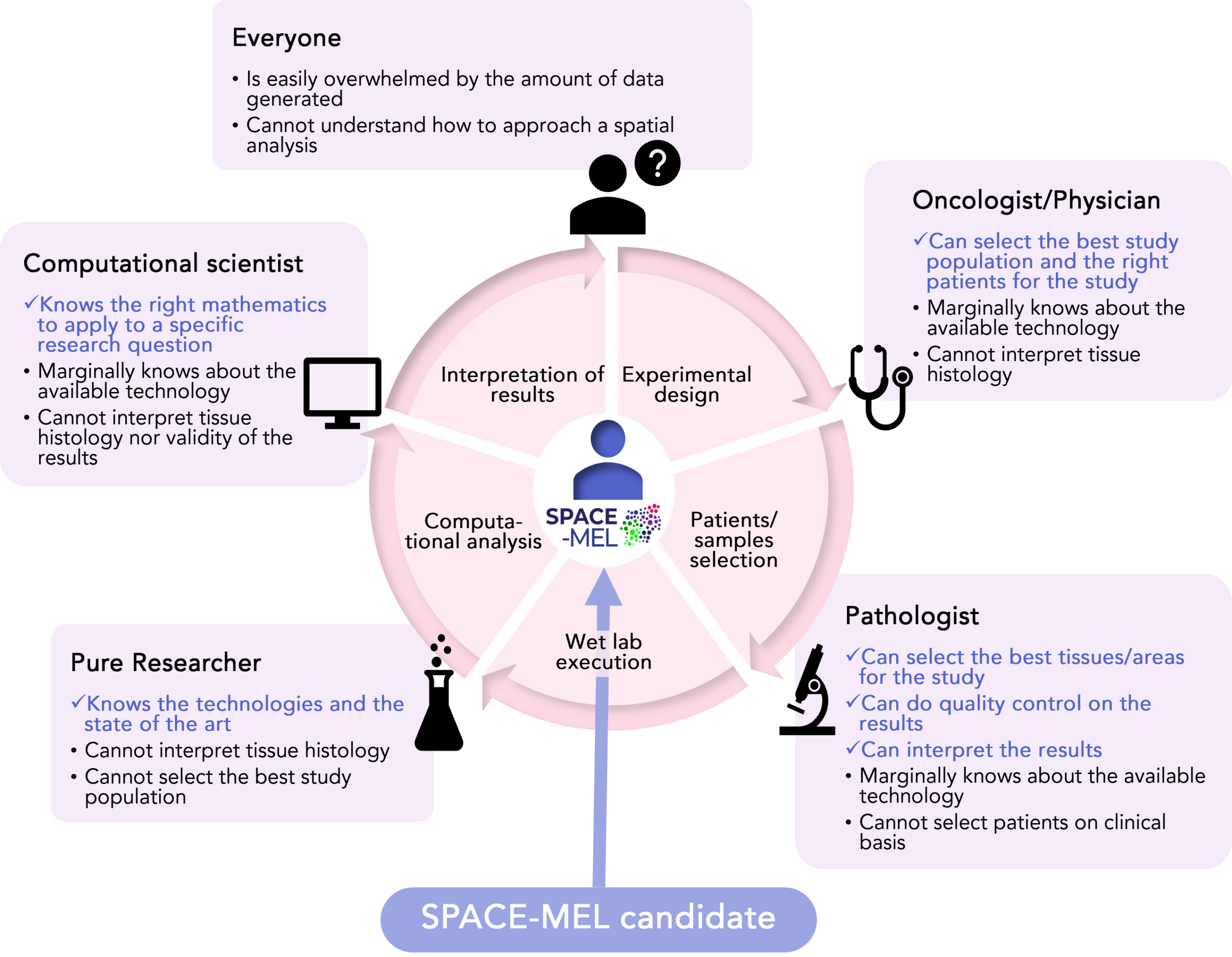
✔️ Knows the state of the art of the available spatial technologies and how it is meaningful to combine them
✔️ Knows the rational behind patient selection
✔️ Has a good basic knowledge of the histopathology of the tissue
✔️ Knows how to check the primary material and the results for quality control
✔️ Knows the hurdles of executing spatial technologies
✔️ Can perform analysis of spatial data by combining open-source readily available results
✔️ Can put the results back into the context and interpret them
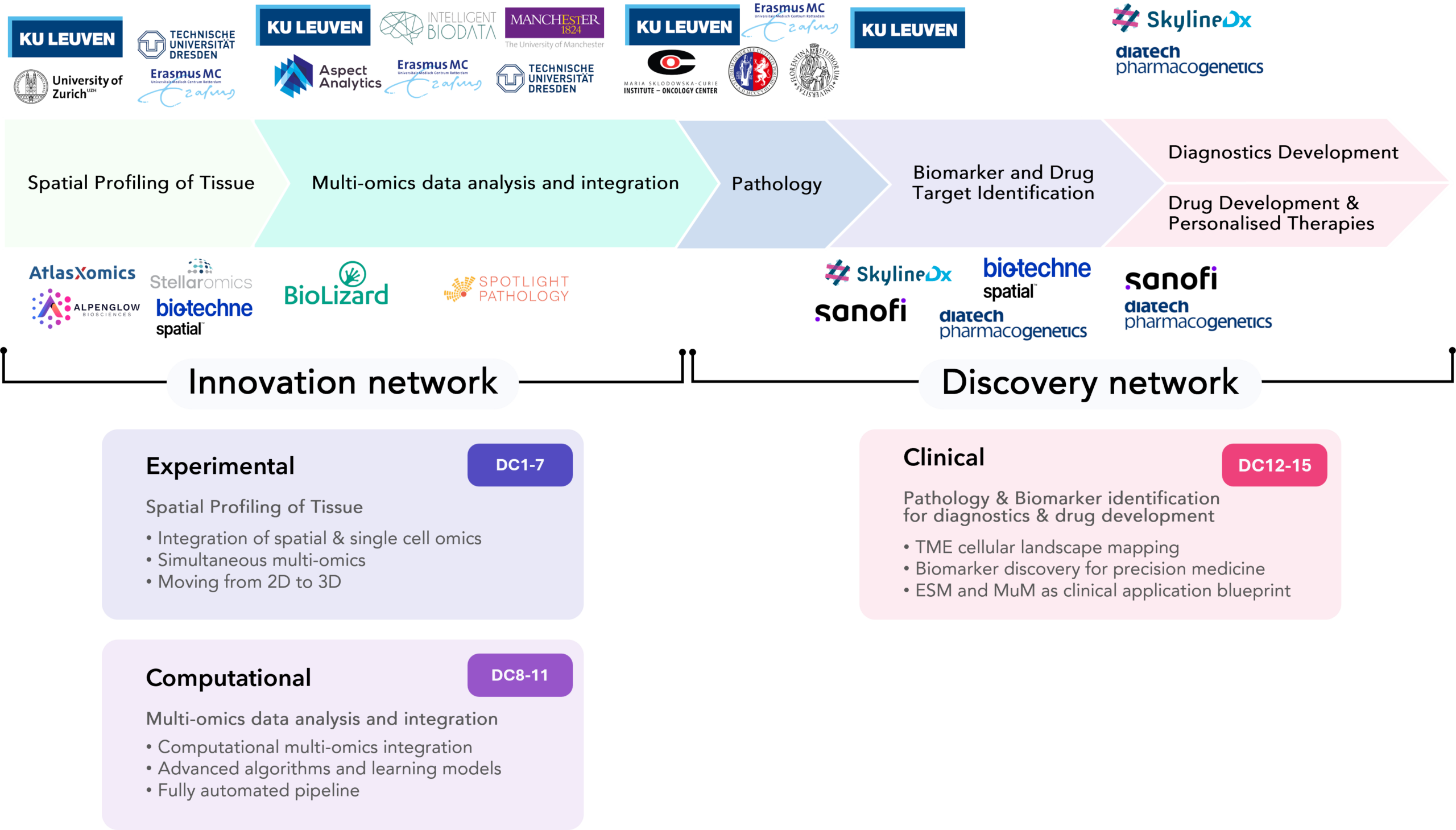
SPACE-MEL covers the full spectrum from spatial profiling and multi-omics to clinical translation. The individual research projects are organised into two networks: the Innovation network focused on experimental biology and computational integration and advanced analysis, and the Discovery network built around applying the approaches from the innovation network to pathology and biomarker identification for diagnostics and drug development.